

Procurement Guidance
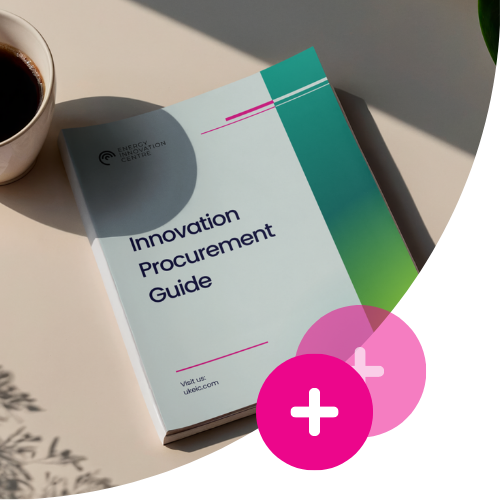
A guide to innovation procurement processes in the UK energy industry
About Procurement
Procurement processes can differ between energy networks and have become more complex following the introduction of The Procurement Act 2023.
Whilst each network has its own processes, the route follows four stages.

Identifying a Need
This stage is for innovators with a new idea or solution that could meet an identified energy network need.
The idea may require investment in research and development. Alternatively, it may be ready for deployment as part of an energy network’s BAU operations.
Proposals to the energy networks can be submitted via The Hive.
Once an innovator submits an idea or solution, a representative from the energy network reviews it. They decide whether it could meet an identified network need.
If it does, the representative works with the network’s procurement team and other relevant teams to seek approval to develop the project.
This may include preparing a product or service specification for the procurement team to use during stage two.
The approvals required will depend on the type of proposal submitted:
- An early-stage idea that needs funding for further research and development. The funding source may affect which approvals are needed
- A deployment-ready solution that needs no further development and can be introduced into BAU operations.

Procurement
This stage applies to innovators who have either:
- Developed an idea with a network through a funded innovation project, resulting in a solution or service that’s now available for the network to purchase
- Submitted a solution that’s ready for purchase and deployment.
In both cases, the innovator will need to go through the network’s procurement process before they can purchase the solution.
Depending on the procurement route, innovators may need to:
- Register on a service such as Achilles UVDB or Find a Tender, so their company information can be pre-qualified. This may include details of insurance cover, general company information, relevant company policies, and financial information such as turnover. These details will be checked (and in some cases), audited by the qualification system provider before being published. The network will then assess the innovator’s capacity and capability
- Complete checks through a Planned Procurement Notice, issued through Find a Tender, if the network is not using a qualification system
- Register on the network’s internal procurement portal for further checks and verification. This helps the network comply with its own governance requirements.
Innovators should identify one person in their organisation to receive network communications, gather the requested information and complete online submissions.
Before starting a procurement process, innovators should gather the following information:
Basic company information:
This will usually be needed, regardless of the procurement route:
- Company name and trading name
- Legal entity type, such as plc, ltd or sole trader
- Company registration number
- Registered company address
- Achilles UVDB or RISQS details, if applicable
- VAT registration number
- Company website URL
- Single point of contact name and email address.
Information required depending on the procurement route:
If registering on a qualification system, such as Achilles, the company may need to complete a questionnaire about the type of organisation it is.
As part of pre-qualification, Achilles may ask for information including:
- Financial records
- Health and safety records
- Quality assurance policies and certificates
- Environmental policies and certificates
- Ethics policies
- Supply chain management information
- Data governance information
- Equity, diversity and inclusion information.
Find a Tender may ask for similar information, although this may be a shorter version of the above.
Network e-tendering portal:
If taking part in a tender process, the innovator will need to read, understand and respond to tender documents.
Innovators will also need to provide technical and commercial information for assessment.
Many energy network companies are utilities for the purposes of the Procurement Act 2023 and, where applicable, must comply with the procurement rules applicable to utilities.
Innovators and suppliers should be aware of the following points about the act:
- For goods or services above a set value threshold, the network may need to run a competitive tender process (following one of the permitted procedures) and advertise the opportunity on the UK government’s online Find a Tender service (find-tender.service.gov.uk). A direct award may be used instead (which doesn’t require a tender), but it must be justified under the act
- For goods or services below the Act’s value thresholds, the network may still run its own competitive tender, depending on the circumstances.
The value thresholds can be found at: https://www.gov.uk/government/publications/procurement-act-2023-guidance-documents-plan-phase/guidance-utilities-contracts-html

Contract Approval & Execution
Once the procurement process is complete, the energy network will notify both successful and unsuccessful innovators of the outcome.
Successful innovators will then be invited to discuss the contract terms under which the network may buy their solution.
Stage two and stage three may overlap. This can happen where commercial negotiations form part of the procurement process and help determine the successful supplier.
In this case, the network would usually share its proposed contract terms during the procurement process. The supplier would likely need to accept them in principle to continue through the tender process.
To progress commercial negotiations, innovators will need to make sure someone from their team is available to speak with the energy network. This person must have full authority to agree matters on the innovator’s behalf.
Innovators should review the energy network’s standard contract terms and may wish to seek independent legal advice if they are unsure about the terms or their effect.
Once both parties have agreed the commercial arrangements and contract terms, the contract can be signed.
The energy network will discuss the terms on which it proposes to buy the innovator’s goods or services.
This will include:
- Negotiating the commercial arrangements for the purchase
- Agreeing the contract terms for the supply of goods or services.
Networks usually have standard contract terms for suppliers. Innovators should raise any concerns and work with the network to agree the final terms. Innovators may wish to seek independent legal advice on areas such as intellectual property, liability, passing of risk and title, warranties, indemnities, limitation of liability, confidentiality, data protection and termination rights.
Once the commercial arrangements and contract terms have been agreed, both parties can sign the contract. This creates a legally binding relationship between them.

Deployment & Payment
This stage applies to innovators that have signed a contract with a network and are ready for their goods or services to be deployed as part of the network’s BAU operations.
This ensures the network can order the innovator’s goods or services and make payment for them accordingly.
The energy networks will explain how to obtain a PO and how invoices should be submitted.
When delivering goods or services, innovators must follow any instructions or requirements set out in the network’s contract or PO. These may include standards they must meet, or steps they must follow before entering parts of the network.
The network will confirm an order for the innovator’s goods or services by issuing a purchase order (PO).
The PO will include a unique number, which must be shown on the invoice. Without this PO number, the network will be unable to make payment.
Unless otherwise agreed in writing, goods or services should not normally be supplied until the required PO has been issued. Payment will be made in line with the PO terms or as agreed in the contract.
What happens afterwards?
Completing procurement with a network is only the start of the relationship as an approved supplier.
The contract forms the basis of that relationship. The network will work with the innovator or supplier to help keep the process for ordering goods or services as smooth as possible.
The network will advise the innovator of any changes to its commercial or regulatory requirements. The innovator should also tell the network about any changes within its own business.
Innovators will usually be given a contact for the supply of goods or services. Most networks will also have a general enquiry route, either through a mailbox or their procurement portal.