


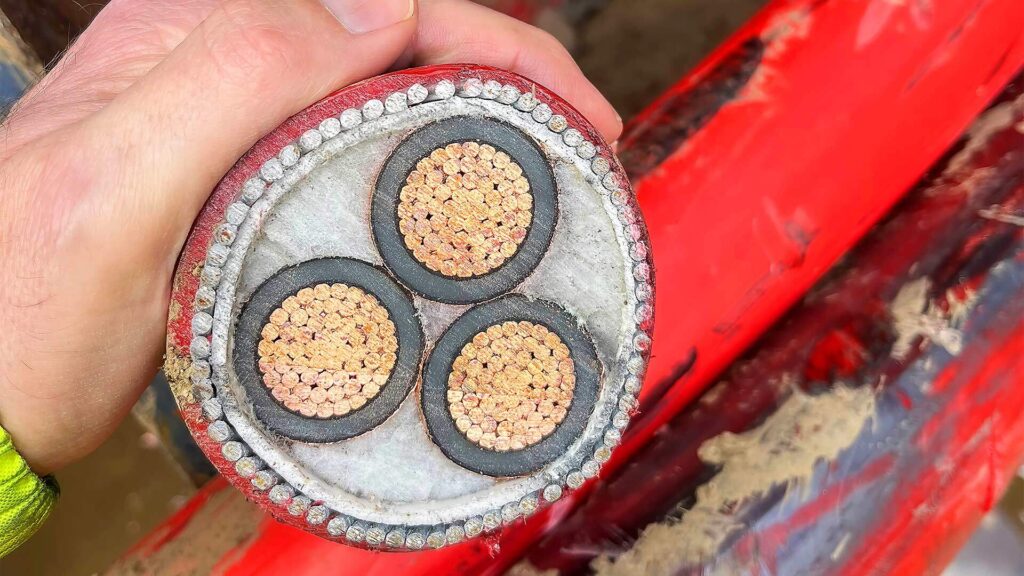
The University of Manchester (UoM), SP Energy Networks and the Energy Innovation Centre (EIC) are launching an 18-month project to explore whether underground electricity cables affected by water treeing can be rejuvenated rather than replaced.
The project will combine research, modelling, laboratory testing and cost analysis to assess the potential benefits for reliability, cost and carbon reduction.
Challenge
Underground electricity cables are a vital part of the UK’s distribution network. Many are insulated with cross-linked polyethylene (XLPE) or similar materials, which can degrade over time through a process known as water treeing.
Water trees are microscopic, branch-like structures that form inside cable insulation when moisture and electrical stress are present over long periods. As they grow, they can weaken insulation, reduce cable performance and increase the risk of failure.
Current approaches include inspections and additives in newer cable designs to slow water tree formation. However, ageing assets can still fail, while limited predictive tools mean action is often reactive. Replacing cables can be costly, disruptive and carbon intensive.
This project will investigate whether cable rejuvenation could offer a proactive alternative that extends asset life, improves network resilience and reduces the need for full replacement.
Who’s the Innovator?
The University of Manchester is leading the technical delivery of the project; founded in 1824, it is the largest single-site university in the UK.
The project team brings expertise in water tree formation and propagation, materials used in cable applications and advanced high-voltage testing. This combined knowledge will support laboratory testing, modelling and analysis of potential rejuvenation approaches for underground cable assets.
What’s Next?
The project will examine water treeing through a multi-disciplinary programme of desk-based research, computational modelling, laboratory testing and in situ monitoring.
The team will review historic and modern cable materials, manufacturing, storage, transport and installation practices to identify the conditions that may increase water treeing risk. Predictive models will then be developed to assess mechanical stress and electric field behaviour in cable insulation.
Laboratory testing will compare aged, unaged and stored cable samples. The project will also assess silane-based rejuvenation fluids, including phenylmethyldimethoxysilane (PMDMS), which are designed to displace moisture and restore insulation performance.
A cost-benefit analysis will compare rejuvenation with full cable replacement, including factors such as labour, excavation, traffic management and site costs.
Findings will be shared with stakeholders through events, publications and presentations.