


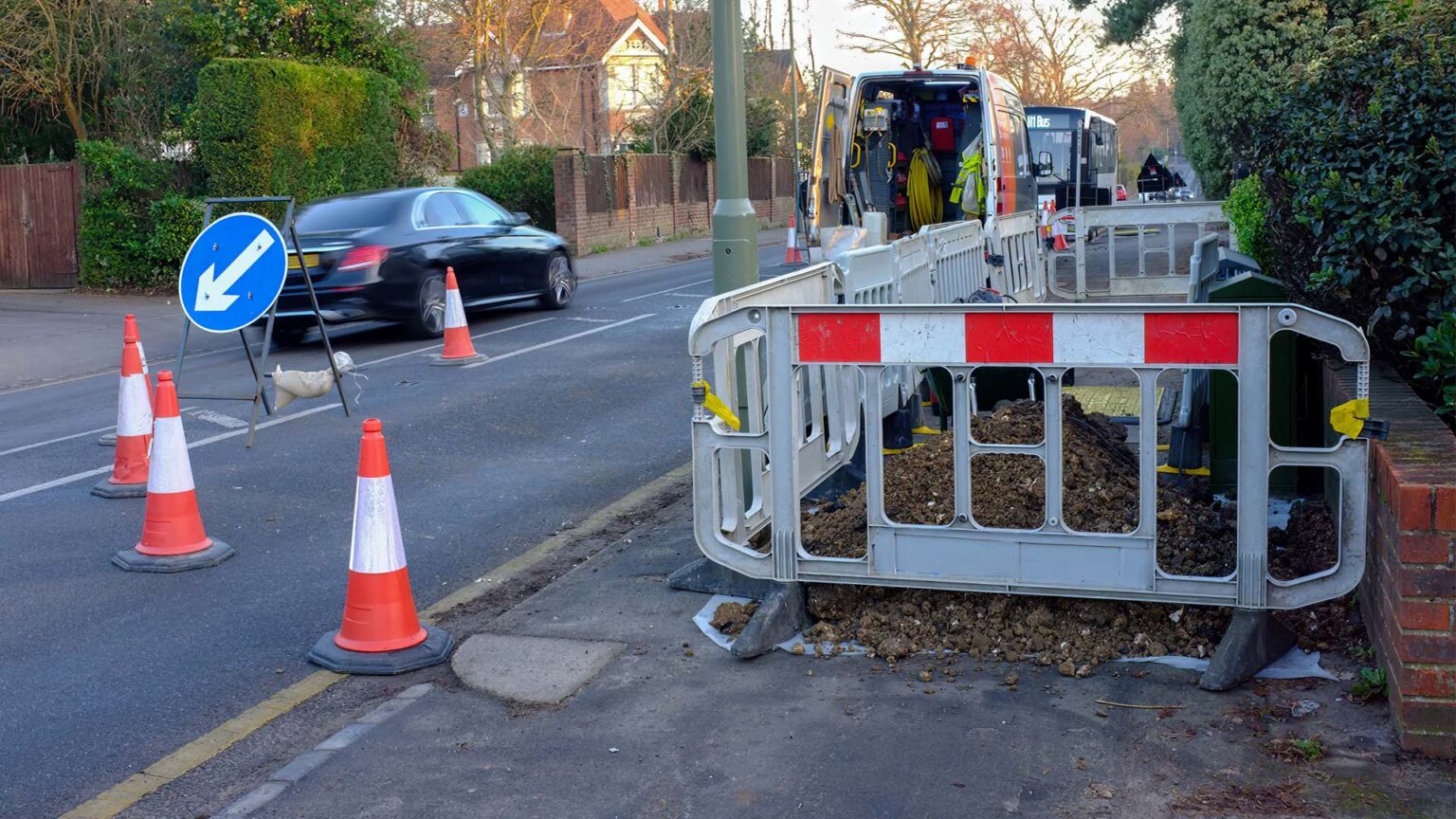
The Problem
UK utility companies look after and improve services for their customers.
Many of these services are underground, especially in high-density urban areas with lots of people. They include electricity cables, gas pipes, water and telecommunications.
When these services need repair or improvement, utilities often need to dig up roads. This work often includes excavation and traffic management to help engineers work safely.
Streetworks barriers must be put around excavations to keep pedestrians safe. These barriers often need access points, which workers use these to enter and leave the work area, move tools and materials, support reinstatement work, and keep access open to nearby premises.
Currently, access is mainly controlled by workers opening, watching and manually closing temporary gates or openings in the barrier. In real working conditions, this can be hard to manage (particularly during reactive works), when workers may need repeated access, handovers may be poor or there may be time pressure.
As a result, gates can be left open, unsecured or not controlled well enough. This can let members of the public enter the work area. It can also cause accessibility problems and increase the risk of non-compliance.
The Code of Practice for Safety at Street Works and Road Works, known as the ‘Red Book’, states that operatives must:
- Sign, light, guard and maintain works safely at all times
- Ensure that individual barriers should be joined together to form a continuous barrier to the working space.
When gates or access points are left open, this continuous barrier can be broken, increasing the risk of non-compliance, financial penalties and avoidable safety risks.
Preferred Output
The preferred output from this opportunity is a solution that can be assessed by the utility organisations for potential trial and deployment on live street work sites.
The solution should provide a controlled access point within a temporary streetworks barrier system.
It must align with Red Book (Chapter 8) requirements by helping to maintain a continuous barrier between the public and working spaces when access is not required.
The solution should reduce the risk of access points being left open, unsecured or uncontrolled during works. This could include a controlled, self-closing or otherwise managed mechanism that supports safe access for authorised workers without relying solely on manual checks or supervision.
Deadline
The deadline for this opportunity is 11.59pm on 8 September 2026. Please submit your proposal above.
Questions?
If you have any questions relating to this opportunity, please email us. Your enquiry will be forwarded to the lead engineer, who will respond as soon as possible.